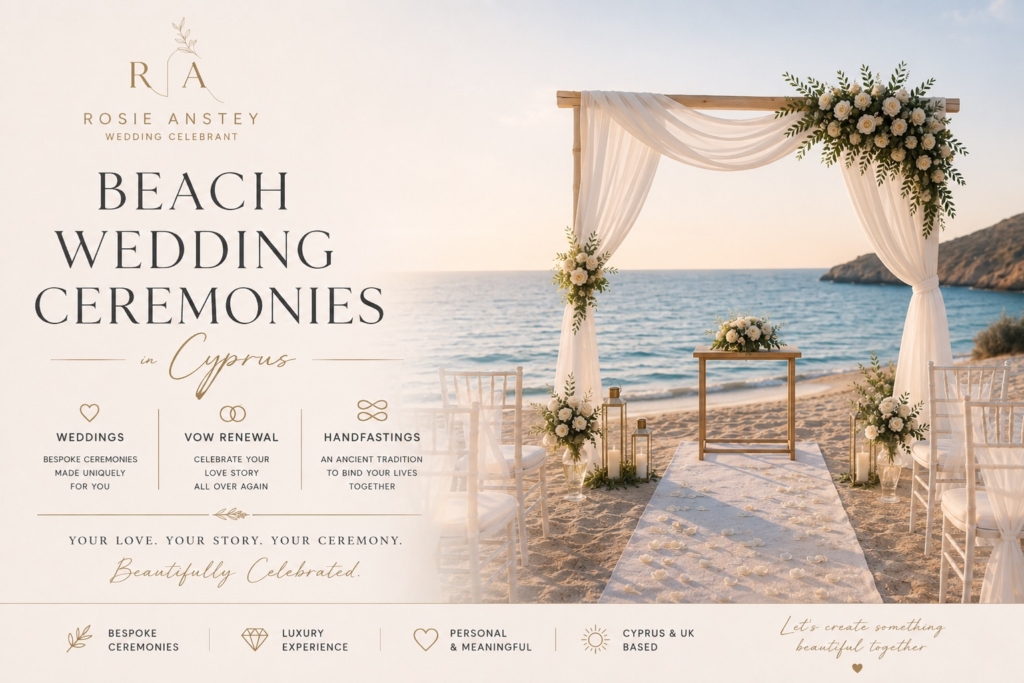
A warm breeze, the sound of the sea just behind you, and everyone you love facing the water as you make your promises – that is often what couples picture when they search for a Cyprus beach wedding ceremony example. What they usually need, though, is not a stiff script. They need to see how a beach ceremony can actually feel, how it can flow, and how to make it personal without losing the sense of ease that drew them to Cyprus in the first place.
A beach wedding works beautifully because it already has atmosphere. The setting does a great deal for you. The ceremony itself should not fight that. It should feel polished, heartfelt, and well-led, but never overworked. The best seaside ceremonies leave room for emotion, a little laughter, and the natural rhythm of the day.
What a Cyprus beach wedding ceremony should feel like
On paper, a beach ceremony can look simple. In real life, it needs careful thought. The sea is romantic, but it is also unpredictable. There may be wind, strong light, background music from a nearby bar, or guests feeling hot by late afternoon. That is why a good ceremony on the sand is not just about beautiful words. It is about structure, timing, and delivery.
For most couples, the right tone sits somewhere between elegant and relaxed. You want your guests to feel part of something meaningful, but you do not want the ceremony to feel formal in a way that jars with bare feet, sea views, and sunshine. It depends, of course, on the couple. Some want soft romance and quiet intimacy. Others want a more celebratory feel, especially if the family has travelled a long way and the ceremony is the centrepiece of a whole wedding holiday.
That balance is where personal ceremony design matters most. You can absolutely have a ceremony that feels luxurious and deeply emotional while still sounding natural.
Why Beach Ceremonies work well in Cyprus
A beach ceremony in Cyprus often attracts couples who want more than a legal appointment followed by photographs. They want a moment with personality. They want guests to feel something. They want the ceremony to sound like them, not like paperwork read aloud in a beautiful setting. With a celebrant-led ceremony, you get to choose the location, the words and the feeling.
Cyprus is particularly well-suited to that kind of celebration because the atmosphere is naturally sociable and relaxed. Families settle into the day quickly. Guests travelling from the UK often arrive ready to enjoy themselves. That makes the ceremony all the more important. It sets the emotional tone for everything that follows.
The trade-off is that destination weddings can create extra pressure. Couples are planning from a distance, often managing suppliers in a different country, and sometimes balancing different cultures or family expectations as well. A well-crafted ceremony helps hold all of that together. It gives shape to the day and confidence to the couple.
Practical details that shape the ceremony
Timing matters more than many couples expect
Late afternoon usually works best for a beach ceremony. The light is softer, the heat is kinder, and guests are more comfortable. Midday can look bright in photographs, but it can feel relentless for everyone standing in formalwear.
Wind changes how words are delivered
A script that reads beautifully indoors may feel too long outdoors. Wind and open space can swallow detail. That does not mean the ceremony should be plain. It means it should be thoughtfully edited, with clear pacing and well-placed pauses.
Guest comfort is part of good hosting
If guests are squinting into the sun, shifting on hot sand, or struggling to hear, they will miss the heart of the ceremony. Shade, water, sensible seating layout, and a properly managed sound setup all make a difference. These details may not seem romantic, but they protect the romance.
Making the ceremony truly personal
The most memorable ceremonies are not memorable because they are unusual. They are memorable because they feel honest. A couple may include a reference to children joining the family, a nod to their shared heritage, a meaningful piece of music, or a simple ritual such as blending sand or sharing a toast. None of these is essential. What matters is whether it reflects them.
For multicultural weddings, a Cyprus beach ceremony with a celebrant can be especially lovely because it allows room for flexibility. You can weave in traditions, languages, or blessings from both families in a way that feels inclusive rather than crowded. The key is careful pacing. When everything matters, editing becomes an act of care.
That is also true for vow renewals. A beach setting can feel especially poignant for couples marking years of marriage, a second chapter, or a family journey that has not always been straightforward. In those ceremonies, the wording often carries a little more depth and reflection, and that can be incredibly moving.
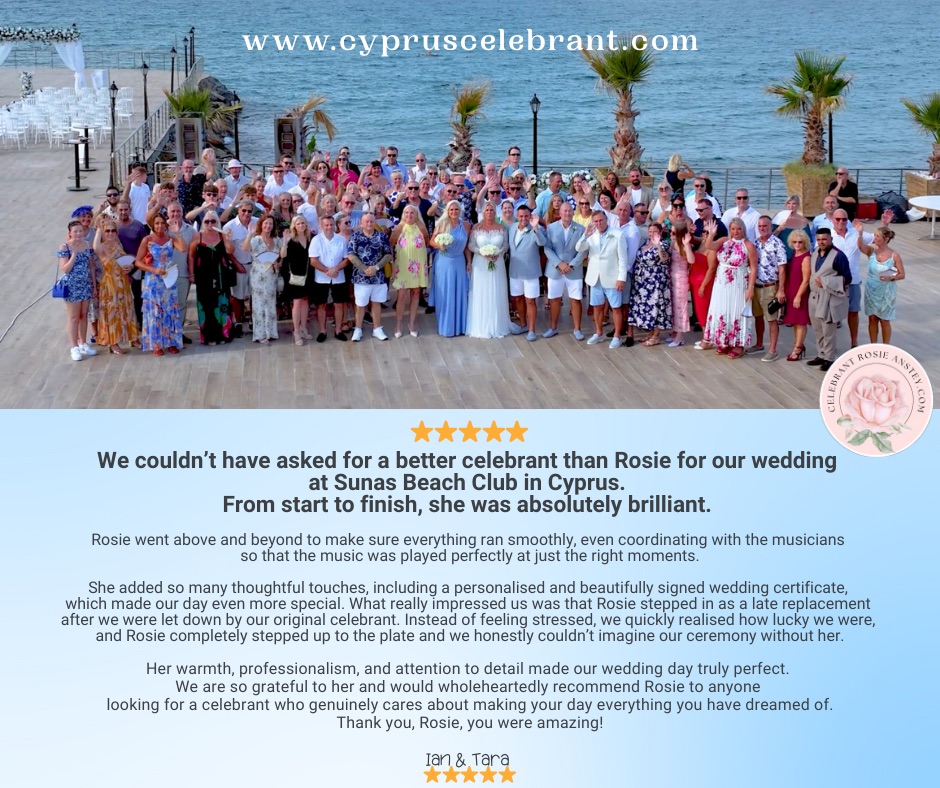
Personal Connection
I get to know my couples really well, because I write the complete ceremony just for them. No template, no generic ceremony – but a personal, bespoke ceremony that feels just right for them.
Some couples want a ceremony that is light, modern, and affectionate. Others want more gravitas. Some want to involve children or parents. Others prefer the focus to stay tightly on the two of them. None of those choices is more correct than the others. The ceremony simply needs to be intentional.
That is often where experienced support becomes invaluable. A celebrant who understands both the emotional side and the practical realities of a destination wedding can help you avoid common missteps – writing too much, trying to include everyone equally, or choosing formality that does not suit the setting. Rosie Anstey’s approach, for example, is built around creating ceremonies that feel beautifully personal while also being calm, well-led, and easy to enjoy on the day.
If you are planning a beach wedding in Cyprus, let the setting inspire you, but let your ceremony be guided by who you are. The sea provides the backdrop. The meaning comes from the words you choose, the people you include, and the way the moment is held for you.
Contact Rosie to start planning your perfect wedding ceremony.
One thought on “Cyprus Beach Weddings”